

The Crash Diet Connection: Why Losing Weight Too Fast Backfires
The Crash Diet Connection: Why Losing Weight Too Fast Backfires...
Home / Patient Information / The Crash Diet Connection: Why Losing Weight Too Fast Backfires

In the journey toward a healthier lifestyle, the appeal of quick results can be extreme. Many people are drawn to “crash diets” plans that promise significant weight loss in a concise amount of time by drastically cutting calories. While the numbers on the scale might drop quickly, these extreme methods often come with hidden costs to the body’s internal balance. One of the most common but least discussed side effects of rapid weight loss is the impact on the digestive system, particularly the gallbladder. Understanding the link between extreme dieting and internal health is essential for anyone looking to manage their weight safely.
The human body is a highly adaptive system, but it prefers gradual changes. When you suddenly deprive the body of the energy it needs, it enters a state of metabolic stress. To make up for the lack of calories, the body begins to break down fat stores at an accelerated rate. While this is the goal of a diet, doing it too quickly forces the liver to work overtime.
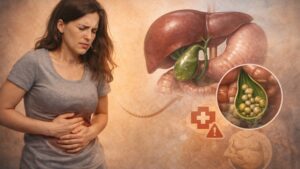
As the liver processes large amounts of fat in a short window, it secretes much higher levels of cholesterol into the bile. Bile is the fluid stored in the gallbladder that helps digest fats. When the bile becomes overloaded with cholesterol, it can become thick and unbalanced. This imbalance is a primary factor in the formation of solid particles that can eventually block the digestive ducts.
To understand why a crash diet causes trouble, it helps to look at the gallbladder’s simple but vital job. Think of the gallbladder as a small storage pouch. Its only task is to hold bile until you eat something. When food enters the small intestine, the gallbladder receives a signal to squeeze, releasing the bile to help break down the food.
On a crash diet, two things happen that disrupt this process. First, because the diet is usually meager in calories and fat, the gallbladder doesn’t get the signal to “squeeze” frequently. Second, the bile inside is becoming thicker because of the extra cholesterol from rapid fat breakdown.When thick, cholesterol-heavy bile sits still for too long, it begins to crystallize, forming what are known as gallstones.
The body views a sudden, sharp drop in food intake as a sign of scarcity. In response, it often slows down the metabolic rate to conserve energy. This is a survival mechanism that has existed for thousands of years. This slowdown is one reason why many people find that their weight loss plateaus after the initial few weeks of a crash diet.
Furthermore, when the body is under this kind of stress, it doesn’t just burn fat; it also begins to break down muscle tissue for energy. Muscle is metabolically active, meaning it helps burn calories even when you are resting. Losing muscle mass during a crash diet can make it harder to maintain weight in the long run because the body’s “engine” becomes less efficient.
Extreme diets often cause nutrient deficiencies by eliminating entire food groups, leading to:
Essentially, physical symptoms like exhaustion are your body’s signal that a restrictive diet is unsustainable.
When the gallbladder is struggling due to rapid weight changes, it may not cause intense pain right away. Instead, a person might experience what feels like persistent indigestion. This can include a dull ache in the upper right side of the abdomen, especially after eating a meal that contains even a small amount of fat.
Other signs of a struggling digestive system during a diet include:
If these symptoms are ignored and stones continue to grow, they can lead to a “gallbladder attack,” which is a sharp, intense pain that occurs when a stone blocks the flow of bile. This is why a steady, moderate approach to weight loss is generally recommended by health professionals.
Skipping meals or long fasts leaves the gallbladder idle, causing bile to become stagnant and thicken into stones. Maintaining a regular eating schedule keeps the digestive system active and ensures the gallbladder empties frequently.
Bile is primarily composed of water. Rapidly losing “water weight” without replenishing fluids makes bile concentrated and thick, significantly increasing the risk of gallstones. Proper hydration keeps bile fluid and helps kidneys flush out metabolic byproducts.
Crash diets often lead to “yo-yo dieting.” Because rapid loss slows the metabolism and reduces muscle mass, the body becomes more efficient at storing fat once the diet ends. This cycle of weight flux puts repetitive, inflammatory stress on the gallbladder.
The body best handles a steady loss of 0.5 to 1 kg per week. This manageable pace prevents the liver from becoming overloaded with cholesterol. A safe strategy includes:
While lifestyle changes are the foundation of health, it is important to recognise when the body needs medical attention. If a person experiences severe abdominal pain, fever, or yellowing of the skin or eyes (jaundice), it may indicate that a gallstone has caused a serious blockage or infection.
Healthcare providers can use non-invasive tools like an ultrasound to check the health of the gallbladder. These scans provide a factual look at whether stones or sludge have formed. Understanding these risks before starting a weight loss plan can help individuals make choices that protect their long-term health.
The desire to see quick changes in the mirror is understandable, but the health of the internal organs should never be the price for a lower number on the scale. By choosing a moderate, nutrient-dense approach to weight loss, the body can adapt without the negative consequences associated with crash dieting.
Focusing on consistency rather than speed ensures that the gallbladder and other digestive organs continue to function smoothly. This balanced path not only supports weight goals but also promotes a sense of well-being that a crash diet simply cannot provide.
The Crash Diet Connection: Why Losing Weight Too Fast Backfires...
The "Lazy" Gallbladder: Why Skipping Meals Might Be the Cause...

Link in Gallstones and Weight Loss Home / Patient Information...
Here at KYM Surgery, we believe in providing holistic & comprehensive medical care for all patients.
Here at KYM Surgery, we believe in providing holistic & comprehensive medical care for all patients.
